

Roadmap for Learning General English
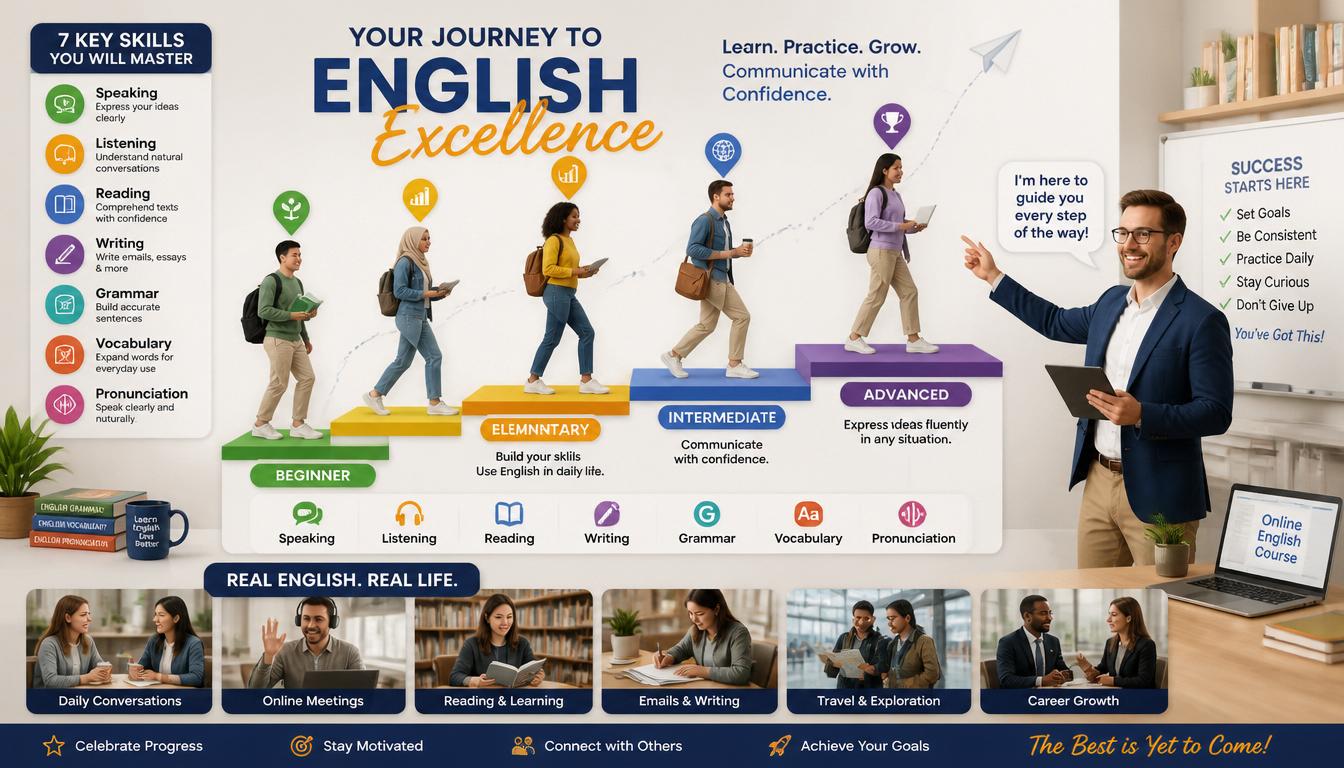
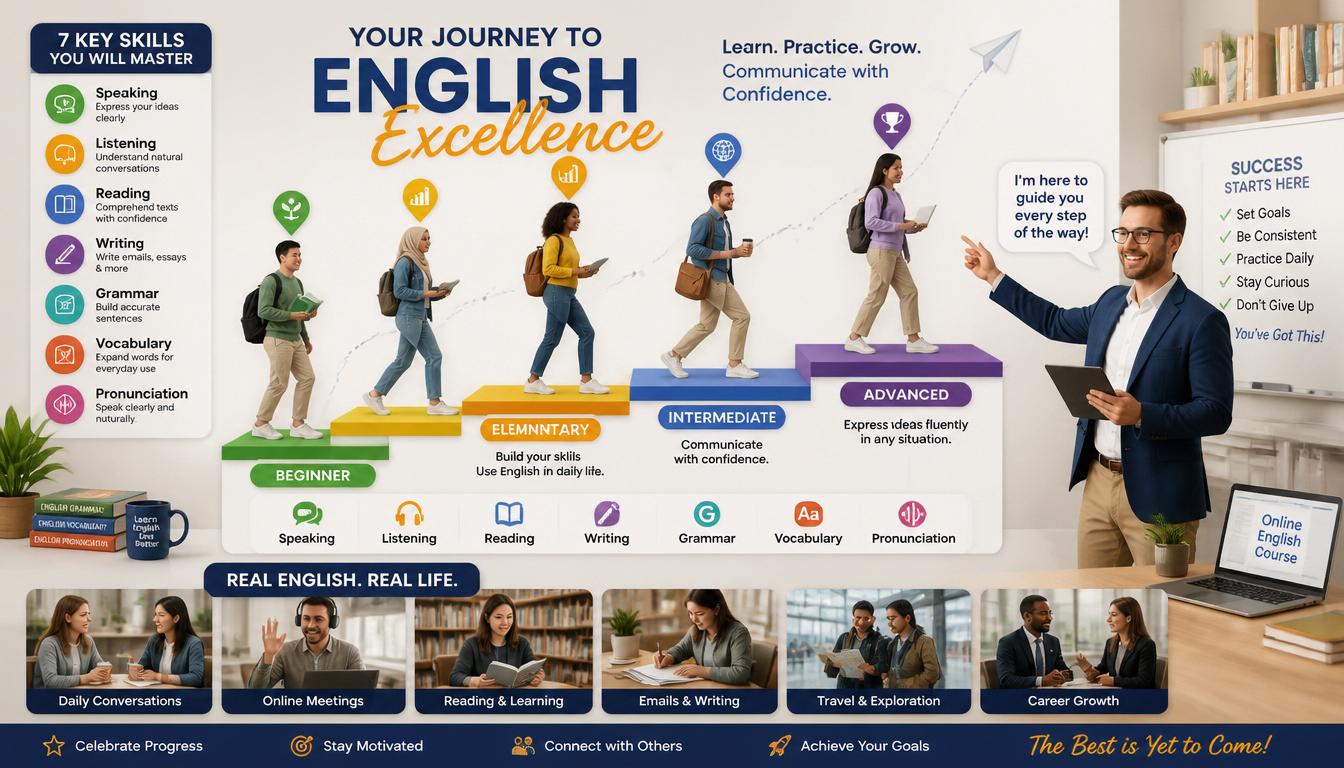
For many new English language teachers, one of the biggest challenges is helping learners understand that language acquisition is a journey rather than a destination. Adult learners, in particular, often arrive in the classroom with specific goals—finding a better job, studying abroad, traveling confidently, or communicating with international colleagues. As teachers, our role is to provide a clear roadmap that guides them from basic communication to greater fluency and confidence.
A successful General English course should develop all four language skills—listening, speaking, reading, and writing—while building vocabulary, grammar, and pronunciation. Rather than treating these elements separately, effective teachers integrate them into meaningful and practical learning experiences.
Stage 1: Building the Foundation
At the beginner level, learners need essential language for everyday communication. This includes greetings, introductions, numbers, time, daily routines, and basic grammar structures such as the present simple tense.
The primary objective at this stage is confidence. Learners should feel comfortable participating in simple conversations and understanding basic instructions. Activities such as role-plays, dialogues, and guided speaking tasks help create a supportive learning environment where students can practice without fear of making mistakes.
Stage 2: Expanding Communication Skills
Once learners have mastered the basics, they can begin expressing opinions, describing experiences, and discussing familiar topics in greater detail.
At this stage, teachers should introduce more complex grammar, wider vocabulary, and authentic materials such as videos, podcasts, and news articles. Encouraging learners to interact through discussions, problem-solving tasks, and collaborative projects helps them develop fluency and communicative competence.
The focus shifts from learning individual language items to using English for meaningful communication.
Stage 3: Developing Independence
Intermediate and advanced learners benefit from activities that mirror real-world situations. They may participate in debates, presentations, workplace simulations, or extensive reading and listening tasks.
At this stage, teachers become facilitators rather than information providers. Learners should be encouraged to take greater responsibility for their progress by setting goals, reflecting on their performance, and engaging with English outside the classroom.
Independent learning strategies such as journaling, watching English-language media, and participating in online discussions can significantly accelerate progress.
Final Thoughts
There is no single path to fluency, but a clear roadmap helps learners stay motivated and focused. By guiding students through the stages of foundation building, communication development, and independent learning, teachers can create a structured yet flexible learning journey.
For new English language teachers, the key is to remember that General English is not simply about teaching grammar and vocabulary. It is about equipping learners with the skills and confidence to use English effectively in their everyday lives. When learners can see their progress and understand where they are headed, they are far more likely to remain engaged and achieve long-term success.
Comments
No comments yet. Be the first to comment.
You need to login to write a comment.
Login to comment