


How to Make Learning English Fun for Kids 🎈📚
Learning English at an early age can be an exciting journey, but one key factor makes all the difference: motivation. When children feel curious and interested, they learn naturally and remember more. But when they feel bored or pressured, even simple words can become difficult to retain. That is why creating a positive and enjoyable learning environment is so important in early language learning.
Traditional memorization methods—like repeating vocabulary lists again and again—often do not work well for children. Young learners usually have short attention spans, and they learn better through experience rather than repetition alone. If English feels like homework instead of play, children may lose interest quickly. So the goal is simple: turn learning into fun! 🎯
Here are some practical and enjoyable ways to help children learn English effectively:
🎵 Games and Songs
Children love music and movement. Songs like the alphabet song or simple action songs help kids remember words naturally. You can also play word games like “I Spy” in English at home. For example, say: “I spy something red” and let your child guess. This builds vocabulary without pressure.
📚 Storytelling
Stories are powerful tools for language learning. Read short picture books together and ask simple questions like “What is this?” or “What happens next?”. For example, while reading a story about animals, you can point and say, “This is a lion. The lion is big!” This helps children connect words with meaning.
🖼️ Flashcards and Visuals
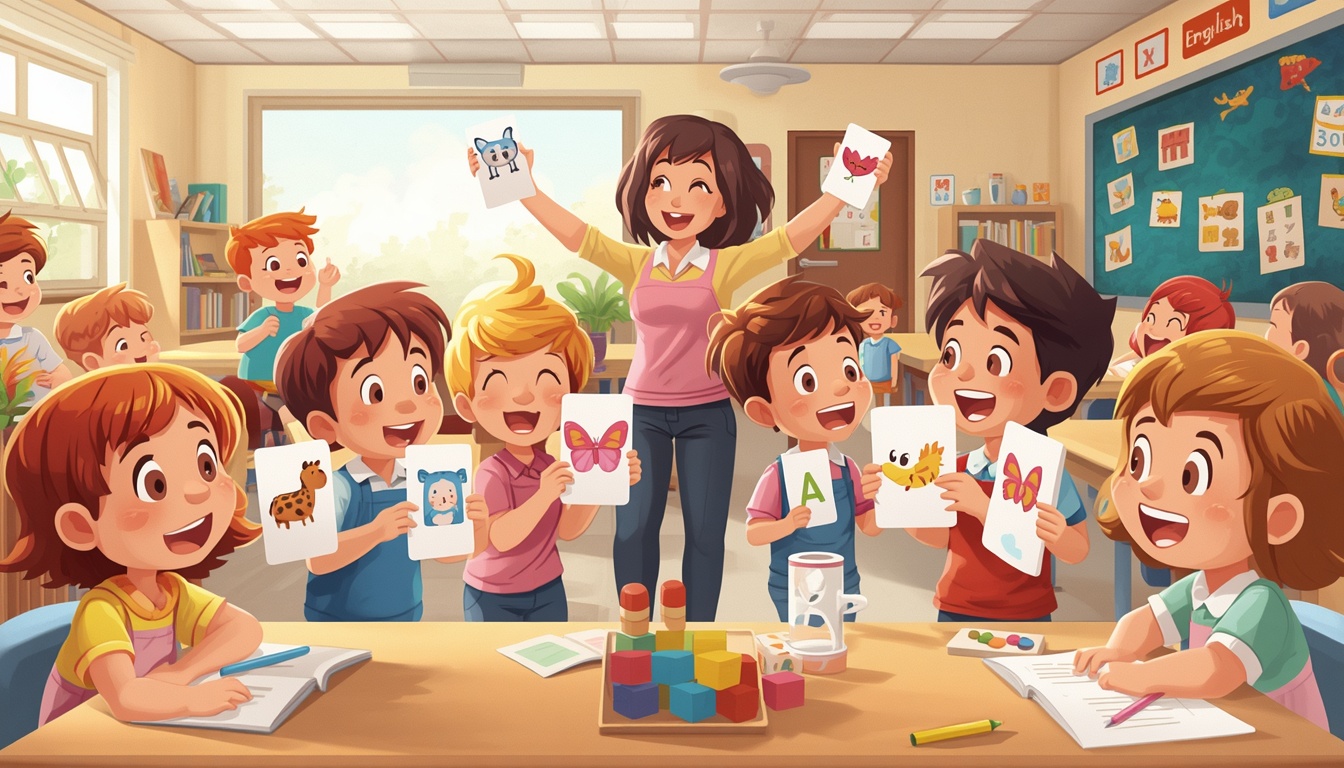
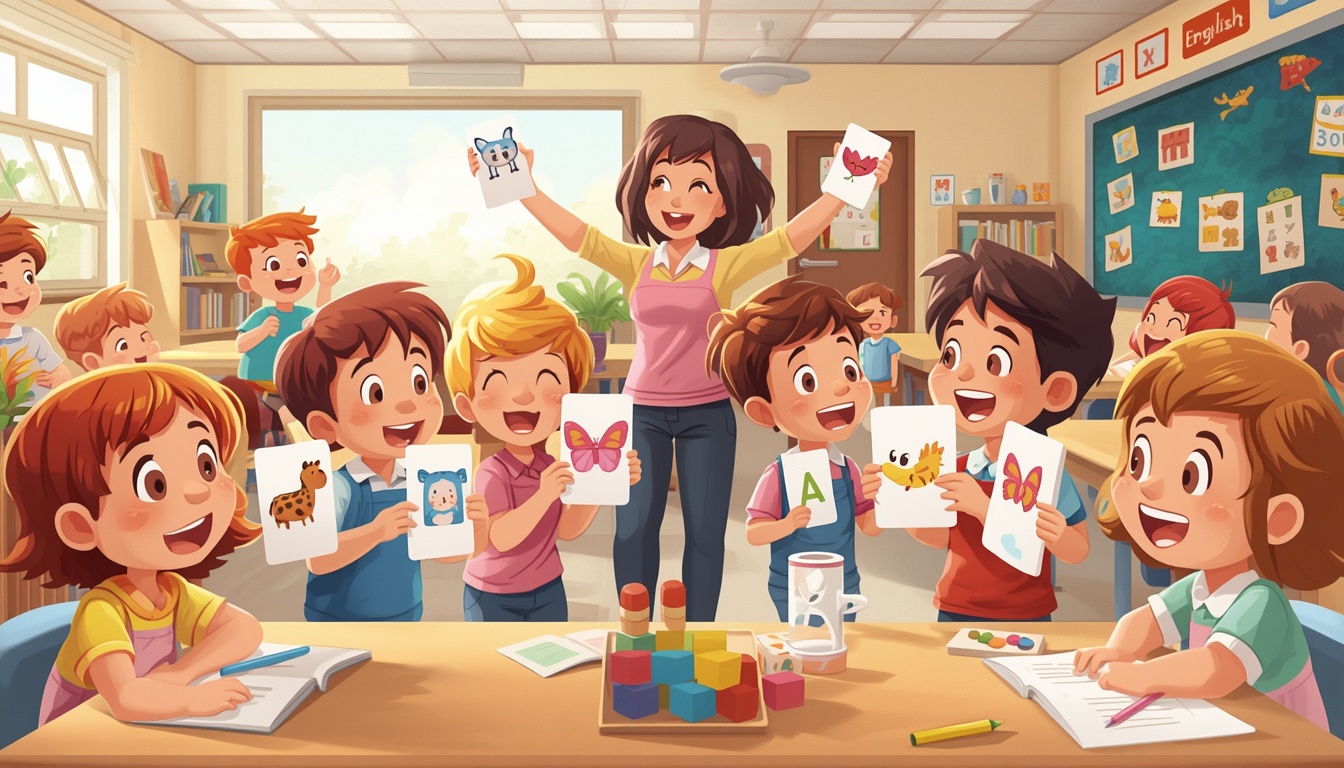
Bright pictures make learning easier. Use flashcards with animals, food, or colors. Show a card and ask your child to say the word. You can also stick labels on household items like “door,” “table,” or “window” so children see English every day.
🎭 Role-Play Activities
Children love pretending! You can create simple role-plays like a shop, restaurant, or doctor’s clinic. For example, one child can be the shopkeeper and say, “What do you want?” while the other replies, “I want an apple.” This builds confidence in speaking.
🏡 Daily English Routines at Home
Make English part of everyday life. Start with small routines like greeting your child in English: “Good morning!” or asking “How are you today?” during breakfast. Even 5–10 minutes daily can make a big difference over time.
🌟 Real-Life Example
A parent might set a “English time” after dinner where the family sings a song, plays a quick word game, or reads a short story together. This creates a fun habit rather than a strict study session.
The most important thing is to keep English learning joyful and stress-free. When children enjoy the process, they stay motivated and learn naturally over time. With games, stories, and daily practice, English becomes not just a subject—but a fun part of life. 🎈
Comments
No comments yet. Be the first to comment.
You need to login to write a comment.
Login to comment